Energy optimization of maritime crossings in river environments represents a major technical challenge linked to current variability. To address this, our team developed a decision-support solution to guide crews toward fuel-efficient and high-performing navigation trajectories.
context
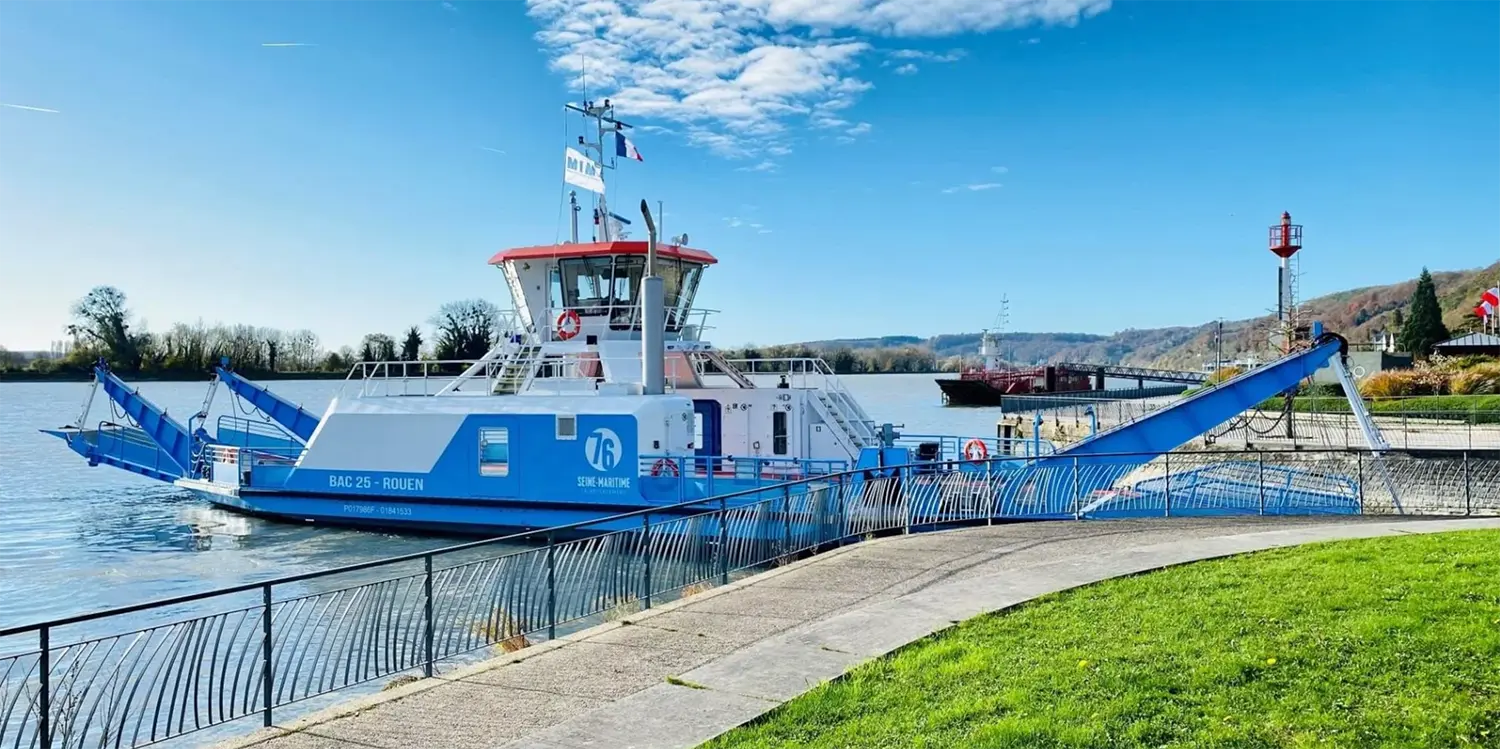
On the Seine River ferries, fuel consumption management is directly impacted by the tidal cycle and the direction of flow. Until now, navigators relied on their experience without access to predictive current data, making trajectory optimization an empirical process.
The experiment, conducted over nearly three months with three crews, made it possible to test a data-based approach to isolate the impact of driving practices. By comparing the results of a group assisted by the application with a control group, we were able to validate the effectiveness of the navigation recommendations, even under changing traffic and weather conditions. The challenge was to provide a clear instruction to closely follow the theoretical fuel-efficient trajectories.
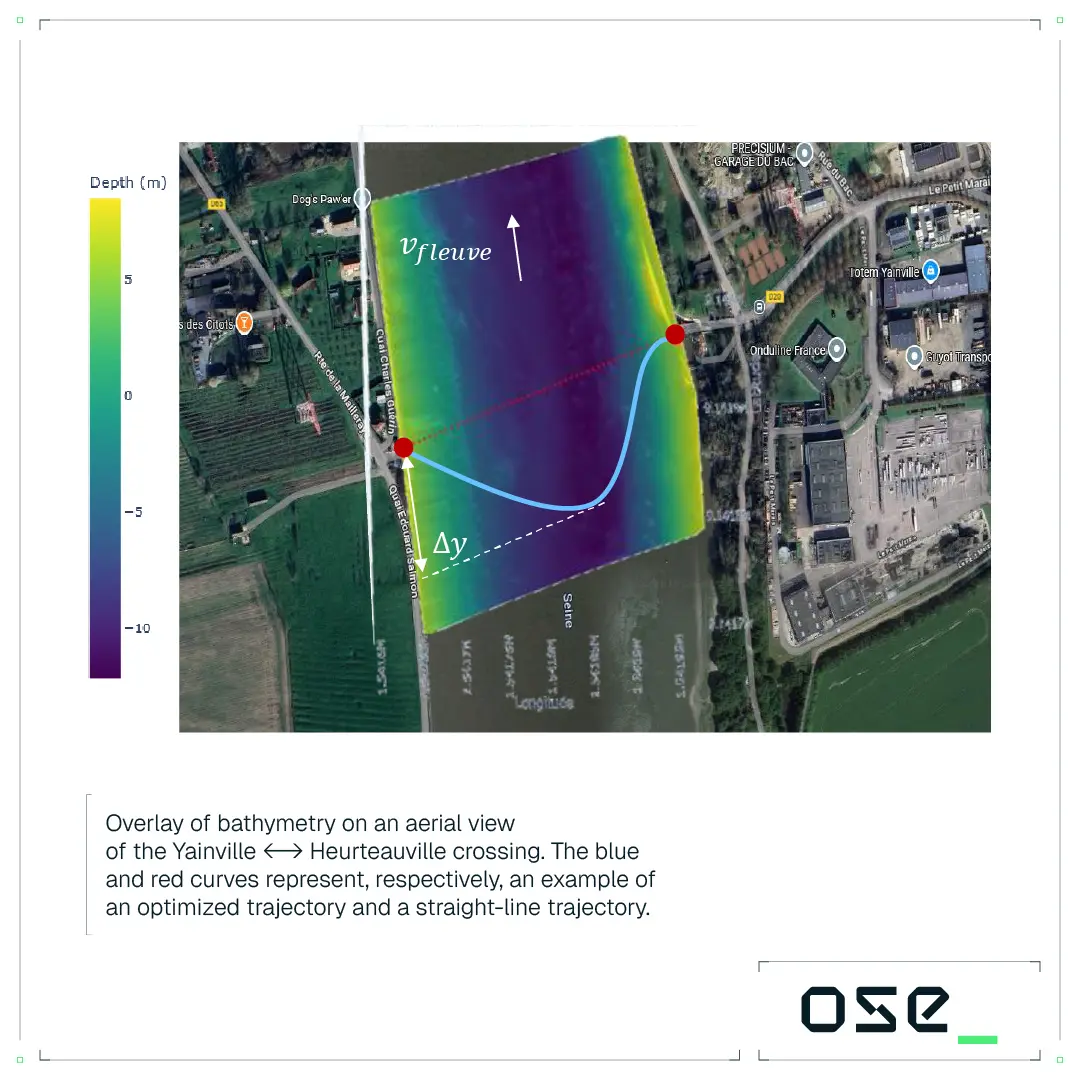
We proposed a "Proof of Concept" (POC) using recalibrated current models to predict flow reversals. This embedded intelligence transforms complex forecasts into simple operational guidance, updated every 10 seconds.
innovations
In this project, our team supported the client in implementing a dynamic guidance tool. The innovations deployed make decision-making on the bridge more reliable.
Predictive Current Modeling
Use of historical hydrodynamic models to anticipate tidal currents.
Trajectory Calculation and Heading Guidance
Definition of the optimal trajectory, followed by a starting heading instruction, providing quick guidance without requiring continuous screen monitoring.
Real-Time Guidance Interface
Development of an ergonomic Web App displaying estimated fuel savings and engine power recommendations.
Comparative Analysis Protocol
Implementation of a testing methodology across multiple shifts, enabling a strict correlation between the reduction in fuel consumption and changes in driving practices.
Operational Data Filtering
Cleaning of field data to isolate exogenous factors (wind, dock incidents) and ensure the reliability of energy savings statistics.
SOLUTION
TURNING HYDRODYNAMIC MODELS INTO A REAL DECISION-SUPPORT TOOL FOR NAVIGATORS.
This application becomes a foundation for smarter navigation, ultimately capable of integrating sensor data to self-correct in real time.
benefits
Thanks to this approach, our client benefits from a concrete lever to manage the energy performance of its fleet. The observed gains are as follows:
01
17% reduction in fuel consumption during periods of usual traffic
02
Identification of the optimal trajectory within mandatory crossing time windows
03
Robust decision support without cognitive overload for the crew
see also
Modelling & Simulation
Artificial intelligence
Improving the reliability of a submarine control and command simulation