01/10/2025
10:37 UTC+1
Page size: 1.024 Mo
load time: 0.04Ms
ce site utilise des cookies_

Swarm robotics: the SWARMz challenge

Robotics activity icon in green
activity:
Robotics
expertise:
Computer science
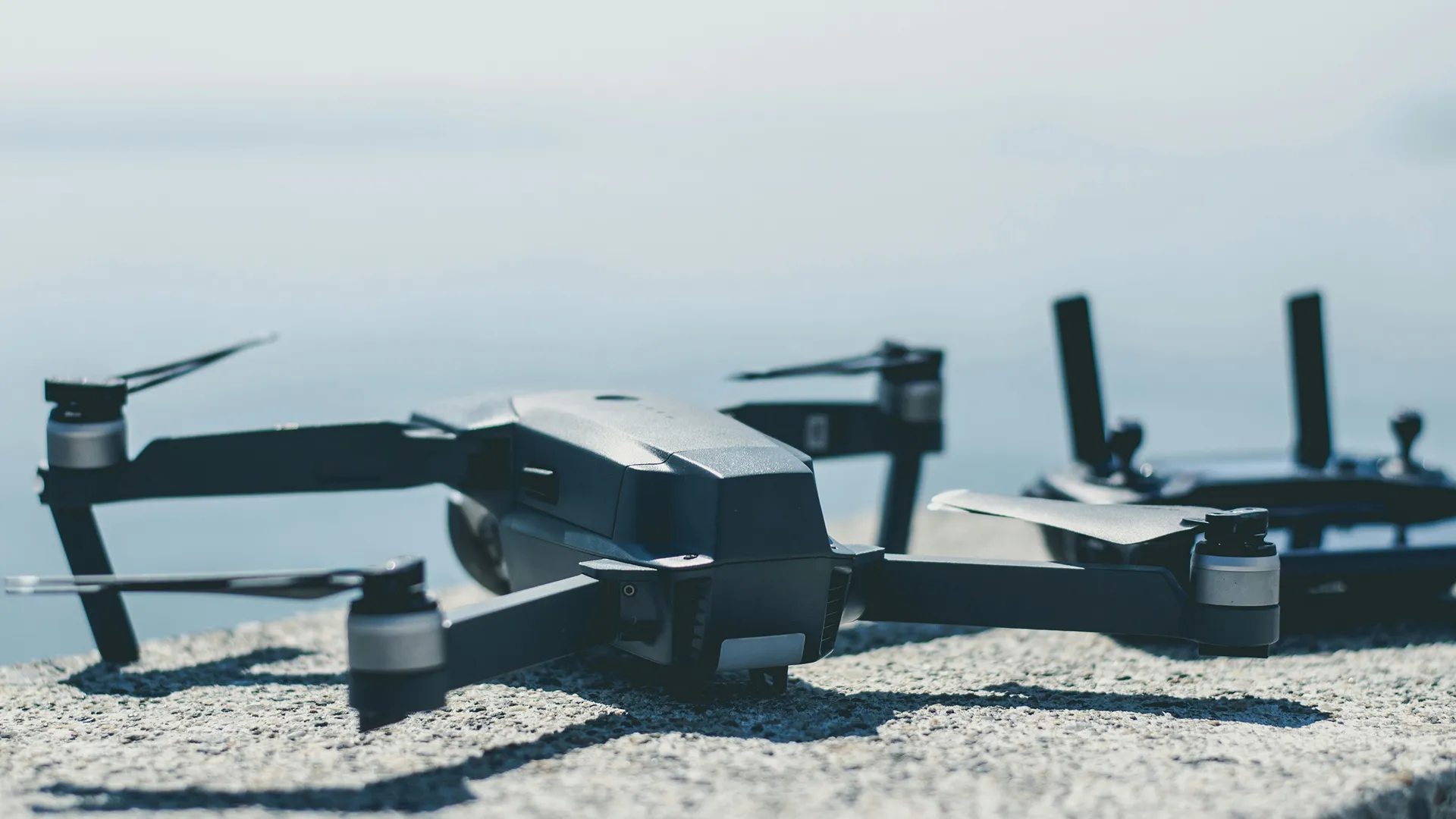
Black drone sitting on a flat surface with a remote control out of focus in the background.
plus iconplus iconplus iconplus icon

Objective: pilot a swarm of 10 drones in order to find a man overboard as quickly as possible.

context
One person fell into the sea! The alert is sent to the control center and the search begins. A fleet of 10 drones takes off and goes close to the reported position. The person is located within a radius of 1km around this position and it is necessary to find them as quickly as possible because the more time passes and the more the chances of finding them in good health.Feedback on the strategy proposed by the OSE team as part of the SwarMZ challenge..
solution

The collaborative robots At CoeUr
Of the challenge

The strategy is based on the collaboration of drones, each seeking to locally maximize the gain of information at each detection. This approach makes it possible to obtain a high success rate and a reduced average detection time.

definition
Swarm robotics is a field of robotics that focuses on the study, design, and implementation of robotic systems composed of numerous individual robots, called “agents,” that cooperate autonomously to complete specific tasks. The strength of these agents lies in their ability to work together as a group to solve complex problems. Swarm robotics is inspired by the way in which insect colonies or schools of fish interact and collaborate to perform complex tasks.

Our approach to this operational research problem applied to swarm robotics is structured in four main phases:
strategy
Phase 1 — Trajectory Allocation and Collision Management
minus iconplus icon
Definition of individual trajectories and distribution of altitudes to avoid any risk of collision in flight.
The drones are spaced vertically by 0.5 meters and evolve around 90 m in altitude, an optimal compromise between visual coverage and precision.
Each device is given a unique search path before moving on to the next phase.
Phase 2 — Joining the research trajectory
minus iconplus icon
Each drone reaches its mission area as quickly as possible, taking into account the drift associated with maritime conditions.
This foresight makes it possible to start active research as soon as possible and to optimize intervention time.
Phase 3 — Conduct the research
minus iconplus icon
Implementation of a local optimization strategy based on the probability of human presence.
Each drone maximizes the gain of information at each detection, scanning potential space in a short time.
The algorithm adjusts the search based on drift and areas of low probability in order to avoid redundancies and ensure complete coverage.
Phase 4 — Transmission of detection
minus iconplus icon
As soon as a drone identifies a human presence, it alerts the fleet and descends to refine the location with a margin of uncertainty of less than 40 m.
The other drones converge in a spiral formation around the detected area in order to confirm the position.
Once the detection has been validated, the information is transmitted to the control center with guaranteed accuracy.
results

With a success rate of 98.6% and an average detection time of 8 min 09 sec, our solution won the 1st prize in the challenge.

Do you have an innovation or R&D project? Our teams support you in designing and testing your solutions.
Footer Gradient

a single conversation can spark Innovation