01/10/2025
10:37 UTC+1
Page size: 1.024 Mo
load time: 0.04Ms
ce site utilise des cookies_

Development of python tools on the Abaqus software

maritime activity icon in green
activity:
maritime
expertise:
Computer science
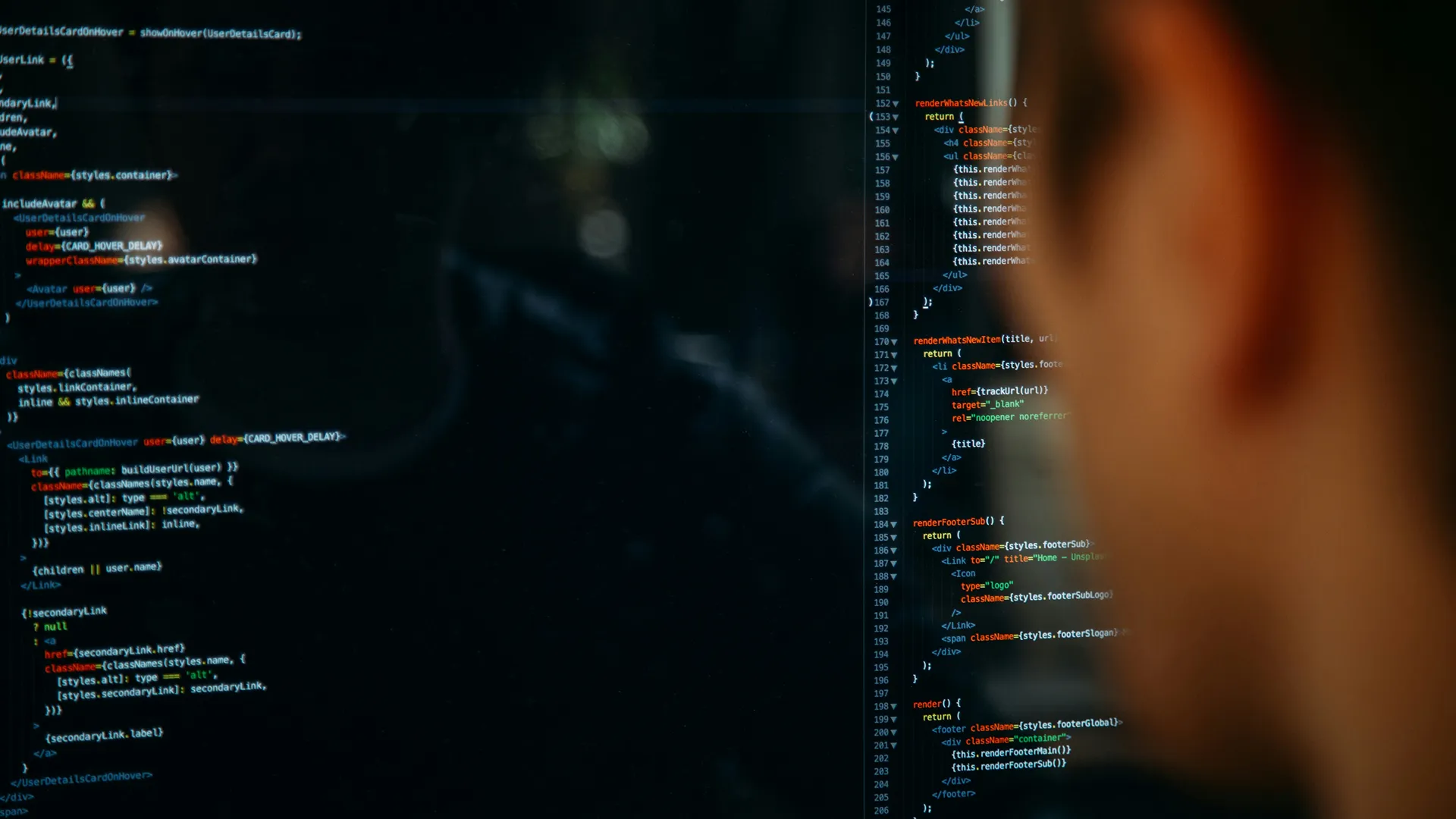
Close-up view of a person looking at a screen displaying colored computer code.
plus iconplus iconplus iconplus icon

Automating complex processes paves the way for faster, more reliable, and fully repeatable analyses. With Abaqus, used by GTT for its finite element simulations, the challenge is to transform a manual workflow into an optimized calculation chain.

context
Our client's “structural calculation” department encounters a large number of studies with particularly heavy and complex post-treatments, in particular in order to validate certain standards, sometimes severe, on various criteria. These post-treatments, which have hitherto been carried out manually, are mainly time-consuming.

It is in this context that the OSE team developed 3 tools in Python to post-process calculations automatically:
01

A tool dedicated to the automatic export of images

02

A stress averaging tool to check structure criteria

03

A tool for the automatic detection of welds from a structural mesh.

solution

An ERGONOMIC tool TO POST-TREAT THE RESULTS

Development of optimized Python algorithms and an intuitive interface to speed up and make the post-processing of simulations more reliable. Are you interested in our solution?

tools
Abaqus Viewer
minus iconplus icon
Our Abaqus Viewer tool allows us to generate a large number of images to automatically produce our client's reports. Until now, this tedious and recurring task was carried out manually.

We proposed a graphical interface in Python Qt that allows you to preconfigure all the post-treatments to be performed in order to automatically generate the requested images.

Our solution takes into account pre-established configurations for certain types of post-treatments that are regularly performed. Thanks to these configurations, the tool makes it possible to generate a hundred images in a very short time, of the order of a minute.
Mean Stress
minus iconplus icon

Our Mean Stress tool aims to automate a task that is particularly laborious to perform manually: the verification of all the criteria defined by classification societies (LR, ABS, DNV, BV, etc.).

The calculation of these criteria is based on the local averaging of the stresses exerted on the structure. The tool automatically performs these calculations, checks whether the criteria are validated or not, and generates a results report to the user.

Different criteria and different methods can be used during this post-treatment allowing a much more complete scan of the study than what can be done manually.
Weld Detection
minus iconplus icon
From a mesh of a structure, our Weld Detection tool makes it possible to automatically extract all the edges that represent the welds in the structure and to classify them into different groups in order to prepare for fatigue studies. We proposed an innovative algorithmic method based on the construction of a graph to extract these welds.

To perform this extraction, our method goes through several steps:

Step 1 — Adjacent cells are determined, i.e. cells sharing a common edge.

Step 2 — Calculate the angle between each pair of adjacent cells.

Step 3 — We build a graph: each mesh represents one node in the graph, and two nodes in the graph are linked if the pair of cells has a common edge.

Step 4 — We establish a form of connectivity according to the angle, thus allowing us to extract all the substructures that make up the mesh.

Step 5 — Finally, the welds that are at the intersection of these substructures are detected, and classified according to their geometric specificities.
Benefits
The tools developed made it possible to facilitate and automate the work of our client.
01

Significant time savings

02

Reliability of results

Footer Gradient

a single conversation can spark Innovation