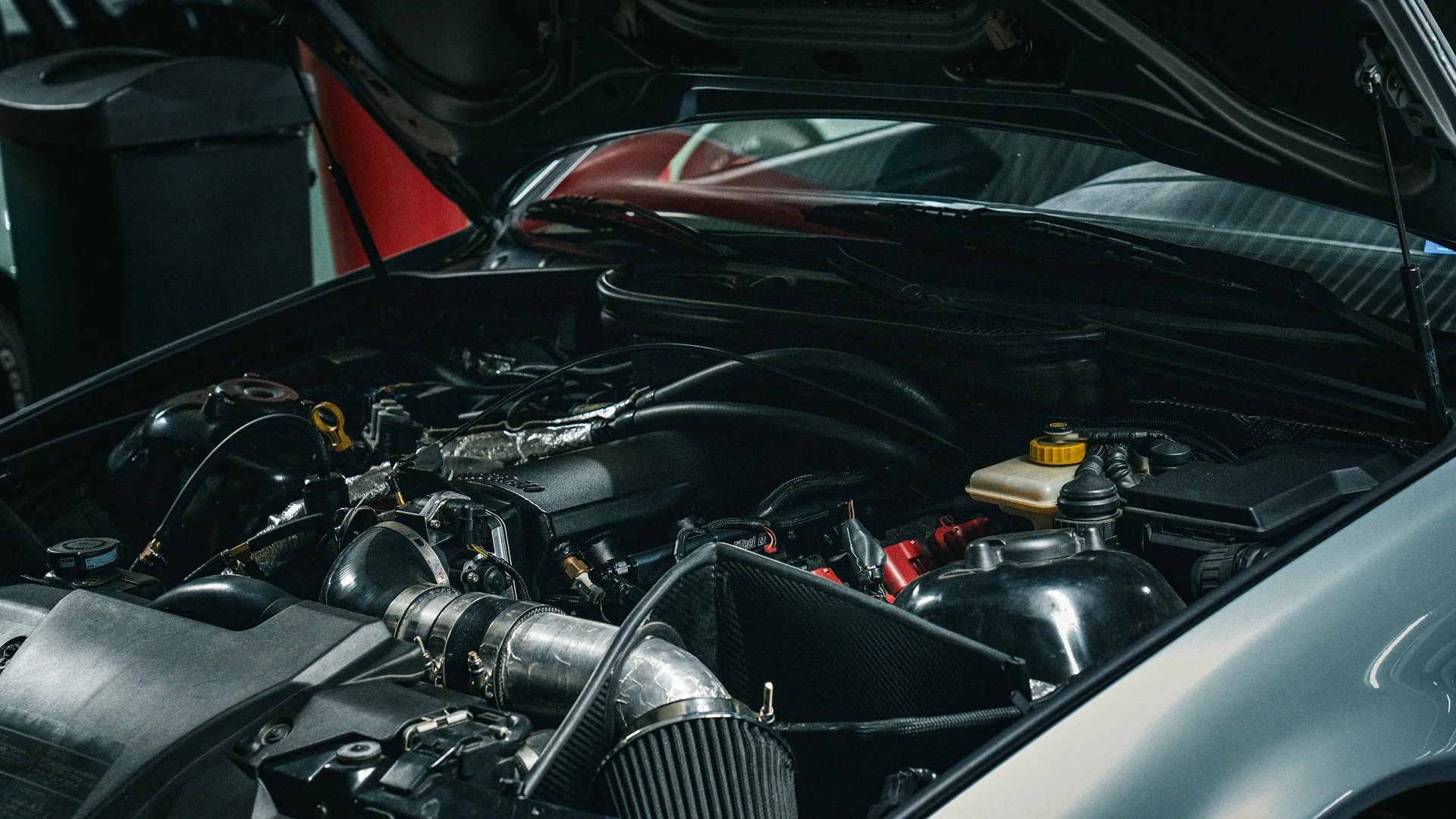
Reducing vehicle development time while ensuring compliance with pollutant emissions standards is a major challenge for the automotive industry. OSE has developed an innovative approach to optimize engine test plans.
context
OSE collaborated with pollution measurement experts from a major car manufacturer to develop an algorithm capable of significantly reducing the duration of engine and vehicle tests, while maintaining the wealth of information. These tests, essential for measuring pollutant emissions, are traditionally long and expensive, requiring hundreds of hours on an engine bench or roller bench with significant cooling times between each cycle.
COMBINE BUSINESS EXPERTISE AND SCIENTIFIC APPROACH
This collaboration brought together the manufacturer's know-how and OSE's scientific expertise to develop a lightweight engine test plan, rich in relevant data and perfectly adapted to operational constraints.
Christophe LECLERCQ
ceo
objectives
The complexity lay in the need to respect strict technical constraints (duration of cycles, maceration times, specific speed profiles) and to ensure exhaustive coverage of possible driving scenarios.
01
Optimize the test plan to reduce test time without losing information.
02
Feed an internal machine learning model with varied data and in sufficient volume.
03
Save time on test campaigns.
04
Preserve critical information in learning data.
approach
OSE brought its expertise in physical modeling, machine learning and operational research. Our main missions were as follows:
Establishing a pattern database
We extracted and analyzed patterns (parts of cycles between two zero speed points) from existing vehicle cycles, by integrating various descriptors (temperature, engine speed, torque, speed, slope).
Analysis and classification of patterns
we used a PCA (Principal Component Analysis) for dimensionality reduction and a clustering algorithm to group patterns by behavioral similarity. A key point was the correlation identified between the manufacturer's model error and cumulative emissions, underlining the importance of targeting high-emission patterns.
Development of a selection and reconstruction algorithm
We prioritized high-emission patterns while ensuring maximum coverage of all pattern clusters and compliance with speed profile constraints. We applied an iterative local search algorithm to assemble the selected patterns into a final test design that respects all operational constraints and maximizes objective function.
benefits
Thanks to our intervention, OSE was able to provide the car manufacturer with a robust methodology and operational advice for optimizing their test campaigns. Although it is a solution in the prototyping phase (TRL lower than an industrialized tool), the concrete gains are as follows:
reduction in test time
By about 20%, or hundreds of hours.
Data preservation
Powering machine learning models.
see also
Modelling & Simulation
OseRoad, the automatic RDE cycle generator
Computer science
What if our light commercial vehicles ran on hydrogen?