How to reconcile Machine Learning and a digital twin to control solar flow? This project, conducted in partnership with the CNRS, aims to develop strategies for controlling the heliostat field capable of generating a light flux precisely defined by the user — whether it is uniform, with a gradient or circular.
context
One of the major challenges in the energy sector is the optimization of the implementation as well as the efficiency of concentrated solar thermal power plants. It is in this context that we were able to develop the digital twin of a power plant in the framework of a partnership with the CNRS.
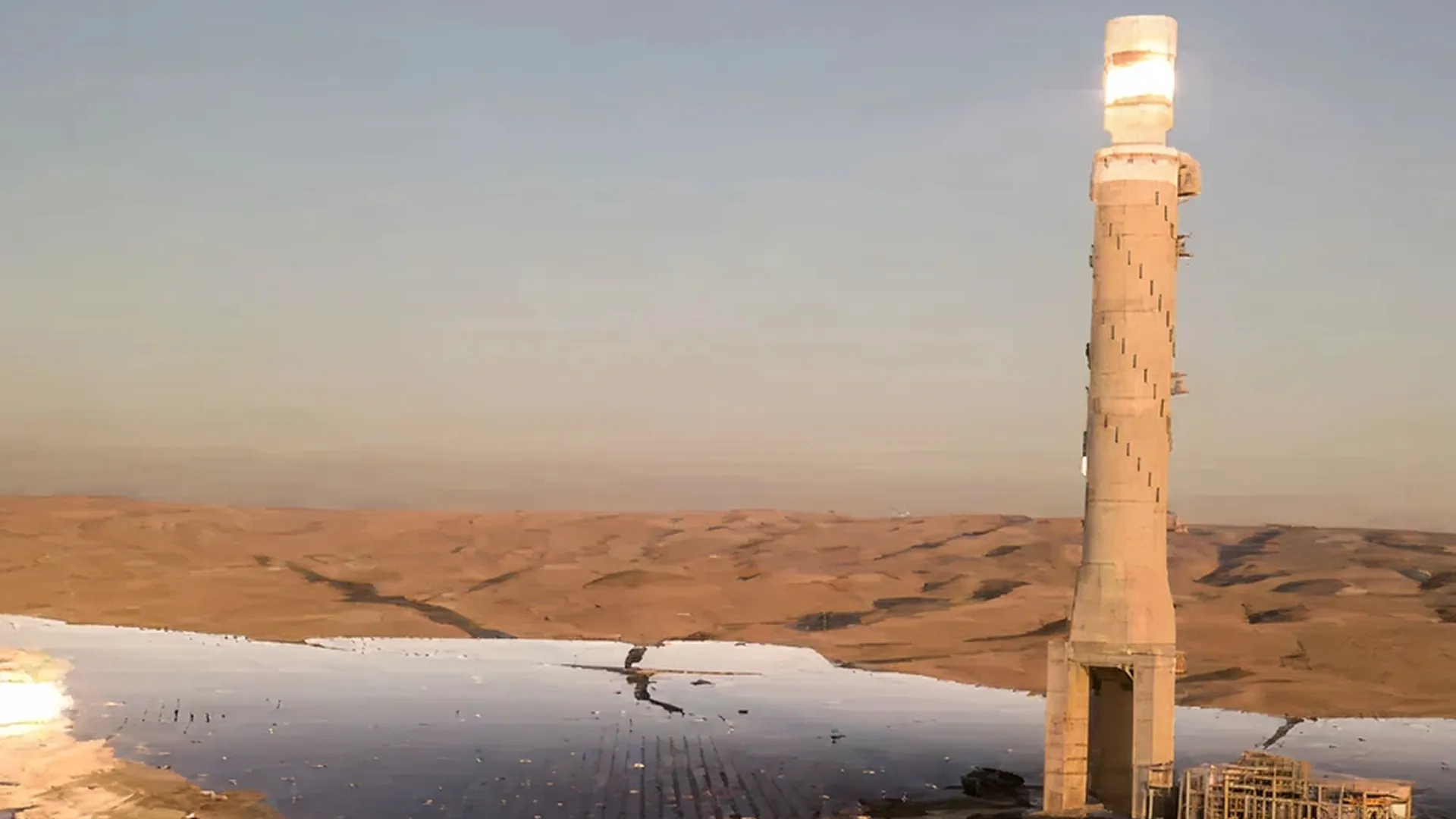
This laboratory works on energy production using CSP (Concentrated Solar Power) technology. This technology consists in concentrating the solar flux via a field of heliostats, which can be controlled, at the level of a tower comprising a receiver. This receiver transforms solar energy into electrical energy. As part of the PEGASE project, the Themis team's priority was to restore the heliostat field and equip the receiver tower.
stakes
Current receiver technologies are robust technologies that can accommodate ununiform solar fluxes (presence of hot spots). In order to increase yields, the CNRS wants to test more efficient, ceramic-based receivers and these need a solar flow that does not include any hot spots.
The main challenge of this project is to be able to control the flow in terms of total power absorbed by the receiver but also in terms of spatialization and to avoid at all costs the hot spots that could cause the receiver to explode.
definition
A digital twin is a virtual model of a complex process or system, updated through a data capture and processing process.
At OSE, we have already used this method in a smart shipping tool. Do you have a similar project? Our team is there for you.
Development, with the CNRS team, of a methodology for measuring the solar flux entering the receiver, based on image processing and data fusion technologies with a fluxmeter.
Learning models
Development of learning models to simulate the flow sent by a heliostat to the receiver, as well as the overall behavior of the heliostat field.
Predictive commands
Design of predictive control laws to optimize the distribution of solar flux and the dynamic management of the heliostat field.
media coverage
AIP Conference Proceedings
_
The first phase of this project (methodology for quantifying solar flux) resulted in the publication of an article in the AIP Conference Proceedings journal.
benefits
Thanks to numerical modeling using physical equations and machine learning methods on measured data, we were able to predict the behavior of a system. We have provided digital know-how in image processing, modeling and control strategy.
team
1 collaborator
timeframe
6 months
partnership
3 years with the CNRS
see also
Artificial intelligence
Energy and logistics optimization
Computer science
Ray tracing and building energy efficiency
Computer science
Reducing electrical consumption on a production site