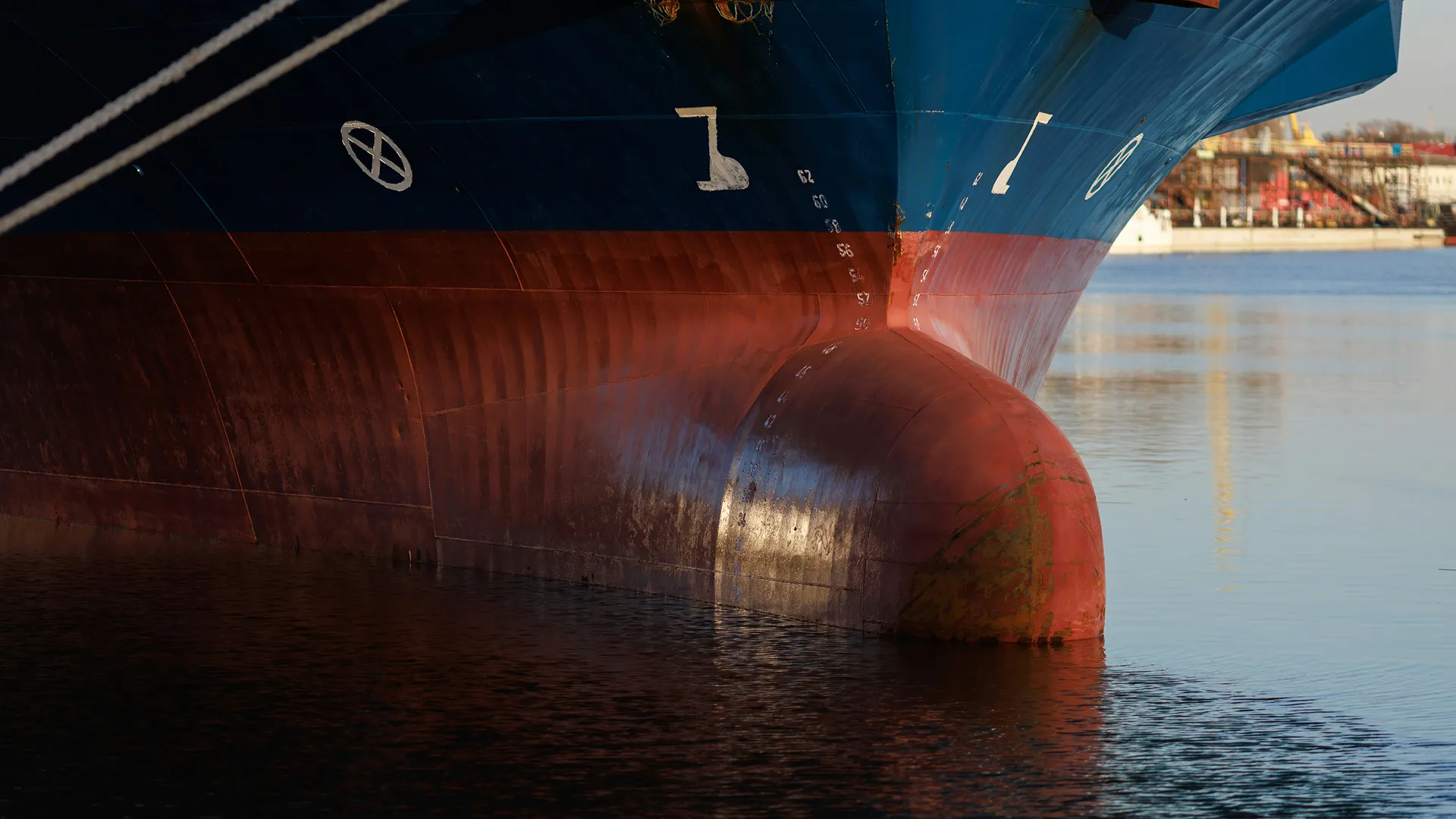
Automatic qualification of the performance of a hull
_
activity:
maritime
expertise:
Artificial intelligence
The objective of this project is to determine the performance of a ship's hull according to its speed, load and attitude.
context
Maritime transport (90% of commercial goods transported in the world, 1/8th of the energy consumption of the transport sector) is in continuous growth.
The strategy of the international organization IMO is to reduce CO2 emissions by 70% by 2050.
Optimizing the hull of ships would reduce consumption by 10 to 20% and therefore their environmental footprint.
solution
Generation and parametrization
Automation of the meshing and the configuration of calculations thanks to a dedicated algorithm.
Hydrodynamic calculations
Estimates of the forces applying to the hull according to various operational profiles.
Optimizing simulations
Use of an experiment design to reduce the number of simulations required.
Behavioral model
Progressive construction of a ship model using Machine Learning methods.
Automating simulation to accelerate analysis
Implementation of a complete workflow to generate and run complex simulations, then leverage their results using machine learning methods. Do you have a similar project?
A prediction model that allows multiple applications, from choosing navigation parameters to defining the optimal shell shape. Automation that reduces study time and cost, without compromising on precision. Patent registered and solution marketed in partnership with Ascenz Marorka.
see also
Modelling & Simulation
Artificial intelligence
Improving the reliability of a submarine control and command simulation